Home
Portrait coming soon
About the Artist

Trained classically.
Tattooing instinctively.

Classically trained Cuban painter and professional tattoo artist. Graduate of the San Alejandro Fine Arts Academy and the Master Tattoo Institute — where he later returned as an instructor. Based in Los Angeles, with select projects in Miami and a residency at Seven Tattoo Studio in Las Vegas alongside Daniel Rocha's team.

Enzo González Lezcano was born in 1998 in Marianao, Havana. At seven years old his mother Yorly placed the first pencil in his hand and introduced him to art. From that day, his grandmother María carried the discipline: she made sure he never missed a single class. He has never spent a year outside the practice since.

Years later he completed a four-year professional career at the National Academy of Fine Arts San Alejandro — founded in 1818 by the French painter Jean-Baptiste Vermay, the oldest art institution of its kind in the Americas and the school that trained the founders of Cuban modernism: *Wifredo Lam*, *Amelia Peláez*, *René Portocarrero*, and the masters who shaped twentieth-century Cuban painting. From inside that lineage Enzo graduated as a professional Cuban painter. Anatomy, composition, tonal precision: the spine of every piece he creates today. And the inheritance runs deeper than school — his great-uncle was *Adolfo Guzmán* (1920–1976), one of Cuba's most celebrated twentieth-century composers and a foundational figure of the *filin* movement. The same gene that placed the piano in Adolfo's hands placed the pencil in Enzo's.

In 2020 he emigrated to the United States, where his father Boris was waiting for him. Boris brought him to the Master Tattoo Institute in Miami, where Enzo became an officially licensed tattoo artist; that same year, the Institute invited him back as an instructor of the program. Today he sits at the intersection of two disciplines: classical Cuban fine arts and contemporary tattoo. He works permanently between Los Angeles and Las Vegas — his private office in LA, and a standing residency at Seven Tattoo Studio in Las Vegas alongside Daniel Rocha's team. Every piece is one-of-one. Every consultation begins with a real conversation. No flash, no repetition, no shortcuts.

But the deepest craft never came from a school. It came from the women at home — his mother Yorly and his grandmother María. They were the first studio: the patience, the standard, the daily insistence that the work be a little better today than it was yesterday. Every line Enzo draws now passes through them first. The artist Enzo is becoming was funneled into being by the two of them.

The Los Angeles Office

Where every
piece begins.

Enzo's private office in Los Angeles is the heart of the practice. By invitation, by appointment, by design — never walk-in, never rushed.

A controlled room

The office is intentionally small. One client at a time, no shared chairs, no background noise. The furniture, the lighting, even the sound in the room is dialed for one purpose: making the next eight hours feel less like a transaction and more like a session in a studio.

Atelier-style consultation

Every project starts with a real consultation, not a price quote. We talk about the piece, the placement, the body, the life behind the request. From there Enzo opens the design rounds privately — two revisions included, no piece leaves the desk until you and Enzo are aligned on a single image.

Full-day sessions

Sessions in LA run in 4–8 hour blocks with breaks. For larger projects we schedule three consecutive days back to back — the body heals as one cycle and the artist stays inside the piece without losing calibration between sittings.

The Origins

A story we are
all part of.

Five thousand years of marks on skin — and the question is still the same.

5,300 years ago · Tyrolean Alps

In 1991, two hikers found Ötzi: a body frozen for fifty-three centuries, with 61 geometric marks across his skin — the oldest documented tattoos in the world. National Geographic reported in 2015 that many of them aligned with acupuncture points. Tattooing did not begin as ornament. It began as medicine, as map, as a contract with the invisible.

1,000 BC · Polynesia

A thousand years before Christ, tatau — to strike rhythm — described a process that took weeks, made with bone combs. Each line was lineage, each figure a vow. When eighteenth-century European sailors brought the word west, they lost the original sound and turned it into tattoo. The verb never left, though: to mark with rhythm, to mark for good.

Across the continents

Priestesses were tattooed in ancient Egypt. In Japan, irezumi documented class, profession, redemption. In South America, the Chinchorro mummies — four thousand years old — still hold traces of charcoal pigment in the skin. Every culture, on every continent, arrived at the same gesture without speaking to one another. Something in the body kept asking for it.

Today · 2026

After five millennia, the tattoo is a respected craft and a serious market — ateliers booked months ahead, private collectors, houses that work by consultation only. It is no longer marginal. It is one of the few rituals that survived from prehistory into an era that changed everything else. To sit in the chair is to enter a conversation five thousand years long.

You are not starting a practice. You are joining a lineage.

From the studio
Family

You are not
a customer.

Enzo does not work in volume. He works with people he chooses to work with. That is why every piece begins with a real consultation, not a price quote — and why most clients return for their second, third, fourth piece. The studio keeps a small, slowly growing group of collectors and friends. When you sit in the chair, you are joining that group.

We remember names. We remember pieces. We remember the conversation from the consultation. Tattooing at this level is a long relationship, not a transaction — the work lives on the skin for thirty, fifty years, and so does the trust that built it.

Welcome.

Lived

After the work,
what stays.

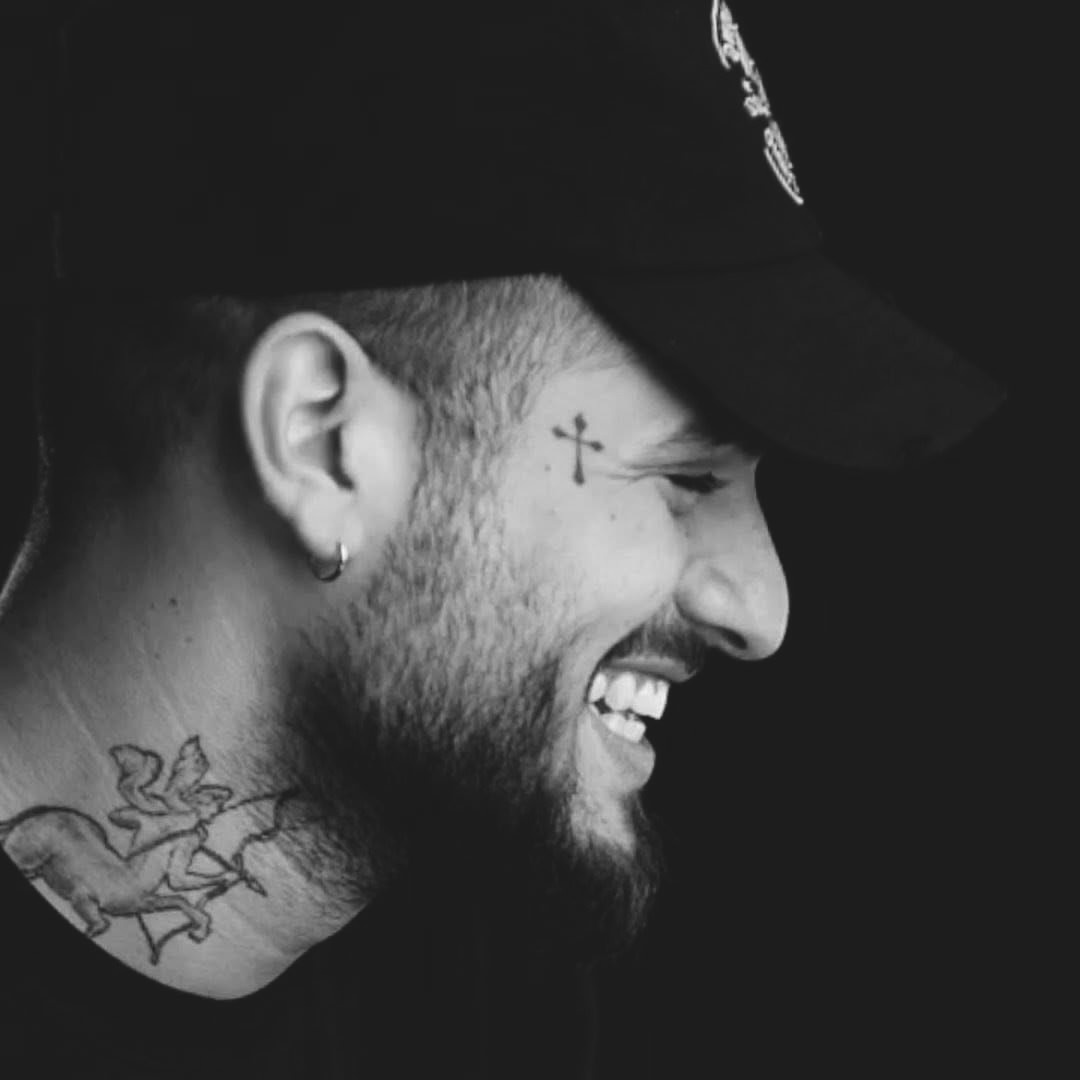
An unscripted moment from a recent client — captured the day their session closed. The reaction is theirs, not ours.

Client experience · recorded by the client
Back to home Main page · Atelier